
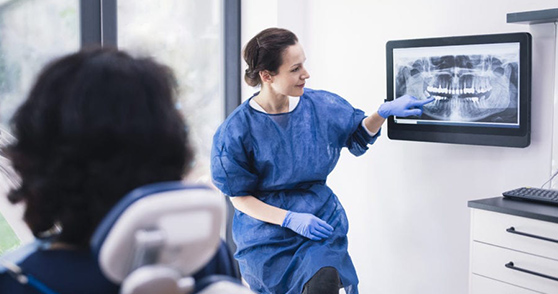
Root canal therapy is treatment used to repair and save a tooth that has been infected due to a deep cavity or cracked tooth. The treatment involves removing the pulp and the nerves of the tooth, and cleaning the infected area. A tooth's pulp and nerve is not important to a tooth's health and function after the tooth has fully emerged from the gums. If the treatment is not performed, pus builds up at the root tip and the infection of the pulp can spread to the surrounding bone. The results in pain and swelling, and your tooth would likely have to be removed.
What are the signs that a root canal is needed?
Severe tooth pain while chewing
Your tooth pain wakes you up at night
Teeth that are highly sensitive to hot or cold, with the sensitivity lingering for some time.
Discoloration or darkening of the tooth
Swollen gums in the area of the infected tooth
What does the treatment involve?
First, an opening is made into the pump chamber through the crown of the tooth.. Once the pulp is removed, the root canal is thoroughly cleaned. If the dentist decides to complete the root canal therapy in multiple visits, a temporary filling will be placed to protect the tooth. When you return, the dentist will remove the temporary filling, re-clean the root canal and pulp chamber, and place a permanent filling and / or crown over the tooth.
Root canal therapy has a high rate of success any many teeth undergoing the procedure can be saved to last a lifetime. Additionally, the crown or filling placed the completion of the procedure makes it hard to notice by others that you had the treatment.
Frequently Asked Questions
Q. What is root canal therapy and why might I need it?
A. Root canal therapy is a dental procedure used to save a tooth that has deep decay, nerve damage, or infection. It involves removing the infected pulp, thoroughly cleaning the inner canal, and sealing the tooth to prevent further infection — helping you keep your natural tooth instead of extracting it.
Q. What are the most common signs that indicate I may need a root canal?
A. Signs that a root canal might be needed include:
- Persistent severe tooth pain while chewing
- Tooth sensitivity to hot or cold that lingers
- Darkening or discoloration of a tooth
- Swelling or tenderness around the gum near the affected tooth
If you’re experiencing any of these in the Hewlett, NY area, call our office for an evaluation.
Q. Does root canal therapy hurt?
A. Modern root canal therapy is comfortable and gentle. Local anesthesia ensures you won’t feel pain during the procedure. Any mild discomfort after treatment is normal and can usually be managed with over-the-counter pain relief. The faster we treat infection, the quicker your pain diminishes.
Q. How long does a root canal procedure take?
A. Most root canal treatments are completed in one visit, typically taking about 30–60 minutes, depending on the tooth and complexity. In some cases, additional visits may be recommended.
Q. What happens during a root canal appointment?
A. During treatment our dentist will:
- Numb the area with local anesthesia
- Create a small opening to access the infected pulp
- Remove the infected tissue, then clean and shape the root canals
- Fill and seal the space and restore the tooth with a filling or crown
This process relieves pain and preserves your natural tooth.
Q. Can root canal therapy save my natural tooth?
A. Yes — root canal therapy is designed to save your natural tooth, even when infection reaches deep inside the pulp. Without treatment, infection can spread, leading to abscess or tooth loss.
Q. Is a dental crown required after a root canal?
A. Many teeth benefit from a dental crown after root canal therapy to strengthen and protect the treated tooth, especially molars and premolars. Your dentist will assess whether a crown is recommended for your specific case.
Q. Can I eat normally after a root canal?
A. After anesthesia wears off, eat soft foods and avoid biting directly on the treated tooth until it’s fully restored. Once the tooth is crowned or fully healed, you can return to your normal diet.
